Rain Should Reveal a Route
A Neomod art-direction study of reflections, shelter and contrast, keeping a cyberpunk street readable without removing the atmosphere that gives it character.

EDITORIAL MILESTONES / NOT RELEASE DATES
This record follows design questions through three editorial stages: observe the problem, propose a change and identify what still needs checking. These stages describe the reasoning in a note. They are not claims that a production milestone has shipped or that a playable build has passed testing. Each article should make its evidence and its uncertainty clear.
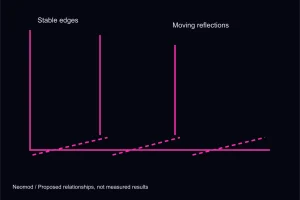
A useful observation names the moment where a player could lose the thread. Perhaps a connection ends without a visible cause, or a rain reflection hides the edge of an exit. The note begins with that concrete situation rather than a broad promise to improve immersion. A small, understandable problem is easier to discuss and revisit.
A Neomod art-direction study of reflections, shelter and contrast, keeping a cyberpunk street readable without removing the atmosphere that gives it character.
The next step connects the proposed revision to the original problem. Moving a warning beside the affected route may help more than adding a larger alarm display. A change should explain what the player can now notice or decide. It should also name a trade-off, such as additional visual detail or a longer period of observation.
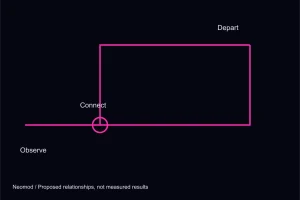
A Neomod route-design note on placing retreat paths before intrusion objectives, so Rainsplice can make withdrawal a deliberate and understandable action.
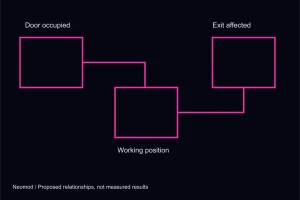
Neomod examines local warnings in Rainsplice, connecting a changed network condition to the street position, objective and exit route it actually affects.
A proposal does not become a result because it appears in a polished article. Open checks describe what a future prototype or review must establish. Follow the Access Routes dossiers for the broader game loops, or the Street Lab for the principles used to judge those changes.
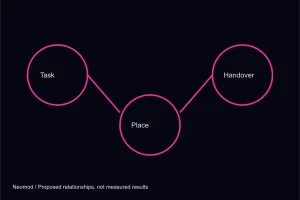
Neomod explores Service Ghost’s fictional permissions as relationships between a task, a place and a handover, rather than a universal key with a countdown.